In partnership with

Men, You've Been Misinformed

Men's skin is about 25% thicker than women's, but thicker skin doesn't mean better aging. It means delayed collapse. For years, your skin looks resilient. Then collagen declines, and when it does, it drops hard: deeper wrinkles, heavier under-eye bags, more dark spots showing up all at once.
Most men were never taught to get ahead of this. Women were. And by the time the signs show up, you're playing catch-up.
Particle Face Cream was built precisely for this. One 6-in-1 formula engineered for men's skin — reduces eye bags, dark spots, and wrinkles, restores firmness, hydrates deeply, and revives dull tone. No complicated routine. Over 1,000,000 men already use it. Try it risk-free with a 30-day money-back guarantee.
April 24
TODAY IN BASEBALL HISTORY
Hey Folks!
Welcome to Classic Baseball Broadcasts Daily Highlights for April 24
Story of the Day: Willie pulls even with Ott
April 24, 1966 At the Astrodome, San Francisco’s Willie Mays tags Jim Owens for a milestone, his 511th career homerun tying Mel Ott for most in National League history.
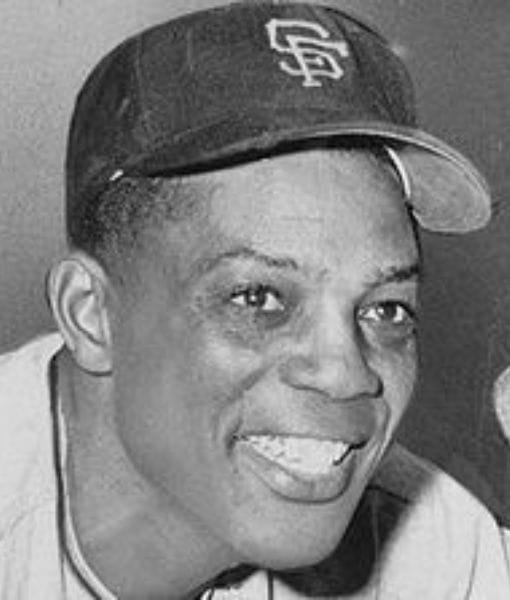
Considered by many the greatest player of all time, Mays was the prototype of the complete player; he hit for average and power, ran the bases with intelligence and speed, played a spectacular centerfield, and possessed a great arm. He was also remarkably durable, playing in at least 150 games for 13 consecutive seasons.
Mays starred in baseball, basketball, and football at Birmingham, Alabama's Fairfax Industrial High School before joining the Birmingham Barons of the Negro National League at age 17. The New York Giants purchased his contract in 1950, and he played for Trenton of the Interstate League, then joined the Triple-A Minneapolis Millers of the American Association in 1951. In his 35-game stay at Minneapolis, he hit a sizzling .477, and the Giants called him up in late May 1951.
Mays had a discouraging 0-for-12 start with the struggling Giants. Manager Leo Durocher kept his spirits up by declaring that despite his poor start, Mays was and would remain the Giants' full-time centerfielder that season. His first hit was the first home run of his ML career, off Warren Spahn. It helped Mays to end his slump, and he became one of the sparks that ignited the Giants in their classic, come-from-behind pennant chase, climaxed by Bobby Thomson's dramatic ninth-inning playoff home run that beat Brooklyn for the NL championship. Mays was on deck when Thomson hit it out. His World Series debut saw him play opposite future cross-river rival Mickey Mantle, who was also a rookie. The meeting foreshadowed the debate of nearly a decade about who among Mays, Mantle, and Brooklyn's Duke Snider was the greatest New York centerfielder of the 1950s.
Mays served in the army in 1952 and 1953, and the Giants finished second and fifth, respectively. He returned to the Polo Grounds in 1954, leading the NL with a .345 batting average with 41 homers and 110 RBI to help the Giants to the NL flag. The 1954 World Series is most often remembered for a marvelous outfield play by Mays in the first game. With the score tied late in the game, Indians first baseman Vic Wertz clubbed a long drive to deep centerfield at the Polo Grounds. At the crack of the bat, Mays turned his back to the plate, raced for the outfield wall, glanced up at the last minute, and pulled the ball in over his shoulder. Nearly 430 feet from the plate, he whirled and threw on a line to the infield. The play killed the Indians' threat, and the Giants won the game and swept the Series.
In 1955, his last season under manager Durocher, Mays led the league with 13 triples, 51 home runs, and a .659 slugging average. He won four consecutive stolen-base titles from 1956 through 1959. He stole 338 bases in his career and might have had more had he and the Giants not elected to minimize his chance of injury on the basepaths. His unique 1957 performance of 20 or more doubles, triples, homers, and stolen bases established his claim as one of the game's greatest all-around offensive threats.
Mays had a habit of addressing his fellow players with a high-spirited "say hey" salutation, prompting New York sportswriter Barney Kremenko to call him the Say Hey Kid. An exuberant figure during his earlier days in New York, he became a folk hero by playing stickball with children in Harlem streets bordering the Polo Grounds. He was embraced lovingly by New Yorkers, who were heartbroken when the Giants moved to San Francisco following the 1957 season, but his reception in the Bay Area was lukewarm by comparison, and he was never shown the affection accorded to Orlando Cepeda and Willie McCovey, who debuted there. Some writers ascribed Mays's limited popularity to his New York affiliation. Other writers found Mays to be aloof from the fans as well as the media, and there were rumors that he demanded special treatment from his managers. Nevertheless, he continued to shine. He cracked 49 home runs in 1962 as the Giants tied the Dodgers for first place on the last day of the season and captured the pennant in a three-game playoff before losing the World Series to the Yankees in a seventh-game 1-0 squeaker.
Along with Mantle and Aaron, Mays was the dominant slugger of the 1950s and 1960s. From 1958 through 1966, he produced eight consecutive seasons of over 100 runs and RBI. He collected four home runs in a game in Milwaukee on April 30, 1961, and he hit three homers in a game on two other occasions. He hammered 52 homers in 1965 to join Ruth, Foxx, Kiner, and Mantle as the only players with more than one 50-home run season. He hit 30 or more homers in each of 11 seasons. On May 4, 1966, Mays passed Mel Ott's 19-year-old record of 511 National League home runs and finished his career with a total of 660, ranking him third on the all-time list behind Henry Aaron's 755 and Babe Ruth's 714.
Mays's preeminence as a centerfielder is supported statistically by his career total of 7,095 putouts, the most in major league history. He used his patented basket catch on routine fly balls, and he regularly dumbfounded onlookers by making seemingly impossible plays. After a particularly astonishing display in which Mays raced to his left, speared a fly ball, spun 360 degrees counterclockwise, and threw the ball on a 325-foot line to nail a tagging Dodger baserunner at the plate, Brooklyn manager Charlie Dressen commented, "I won't believe that play until I see him do it again."
In May 1972, the fading Mays was traded to the Mets. With them, he played his final season and made his final World Series appearance on a 1973 team that had finished the year with a record just slightly over .500. The ten-year contract he signed as a goodwill ambassador and part-time coach for the Mets took effect after his retirement as a player. Shortly after Mays's election to the Hall of Fame in 1979, Commissioner Bowie Kuhn issued a controversial order requiring Mays to choose between his employment by the Mets and his job as a greeter for a hotel casino. Mays chose employment by the casino, and he was barred from his baseball duties in October 1979. However, the edict was lifted in 1985 by new commissioner Peter Uberroth. Mays then retained his job as greeter while serving as a part-time hitting coach for the Giants. He signed a lifetime contract with the team in 1993 and helped to muster public enthusiasm for building Pac Bell Park, which opened in 2000. Mays founded a charity, the Say Hey Foundation, which promotes youth baseball. The Giants retired Mays's number 24 in May 1972. Oracle Park, their stadium, is at 24 Willie Mays Plaza. In front of the main entrance is a nine-foot-tall (2.74 m) statue of Mays, who had a private box at the stadium. When the Giants dedicated a Wall of Fame to their greatest players in 2008, Mays became part of its inaugural class.
At a special ceremony during the Mets' 60th anniversary Old-Timer's Game on August 27, 2022, the team announced that, pursuant to a promise Mets' owner Joan Payson had made to Mays when she traded for him in 1972, they were following the Giants in retiring Mays's number 24. Mays became the 14th person (player or manager) to have their number retired by two teams
Willie passed passed away, June 18, 2024.
Here are links to check out!
More on SABR Bio project here written by John Saccoman
More on the Willie at Baseball Reference here
Visit Willie in Cooperstown or San Francisco
September 2017, Major League Baseball renamed the World Series MVP Award the Willie Mays World Series MVP Award
In 2020, The Athletic ranked Mays at number 1 on its "Baseball 100" list, compiled by sportswriter Joe Posnanski.
In 1999, Mays placed second on The Sporting News's "List of the 100 Greatest Baseball Players", trailing only Babe Ruth.
Willie Mays Audio Vault!
Features over 92 games, including 1951, 1954 (The Catch), 1962 and 1973 World Series. When I listen to these games it is always amazing to hear the praise given to Mays by the announcers.
His interview vault includes:
Over 27 pieces, including the 1961 Homerun Derby, Whitey Ford on pitching to Mays, Leo Durocher on Mays, his 3000th hit, Four Hr Game, Mays on his career and a dozen one on one interviews.
Quote of the day:
"There have been only two geniuses in the world. Willie Mays and Willie Shakespeare." - Tallulah Bankhead
"This man dominates a game like no other player in the history of the game. I don't think there is any play he can't make." - Charlie Fox, Giants manager, 1971
"I wasn't the best hitter, Ted Williams was. I wasn't the best fielder, Roberto Clemente was. I wasn't the best base stealer, Maury Wills was. But I was among the best in everything." - Willie Mays, January 1979
January 23, 1979, Mays was elected to the National Baseball Hall of Fame and Museum in his first year of eligibility. He garnered 409 of the 432 ballots cast (94.68%). Referring to the other 23 voters, New York Daily News columnist Dick Young wrote, "If Jesus Christ were to show up with his old baseball glove, some guys wouldn't vote for him. He dropped the cross three times, didn't he?"
Game of The Day:
Game of the Day — April 24, 1976 Kansas City Royals vs New York Yankees
ALCS Preview!

April 24 highlights and Historic Days!
April 24, 1945 – A.B. “Happy” Chandler becomes baseball’s second commissioner. The major league owners unanimously elect the former governor of Kentucky on the first ballot and reward him with a seven-year contract. Chandler succeeds Judge Kenesaw Mountain Landis, the game’s first commissioner, who died in 1944. Baseball’s second commissioner will remain in the Senate during the first six months of his tenure in office.
April 24, 1946 — Former major leaguers Jesse Burkett, Frank Chance, Jack Chesbro, Johnny Evers, Clark Griffith, Tommy McCarthy, Joe McGinnity, Eddie Plank, Joe Tinker, Rube Waddell and Ed Walsh are inducted into the Hall of Fame.
April 24, 1947, Johnny Mize of the New York Giants becomes the first major leaguer to hit three home runs in a game on five different occasions. The “Big Cat” hits his most recent trio against Johnny Sain of the Boston Braves. In spite of Mize’s barrage, the Giants lose the game, 14-5.
April 24, 1948 – Bill Nicholson of the Chicago Cubs makes his bid to become the first player in Wrigley Field’s 34 years of existence to reach its distant right centerfield scoreboard with a batted ball. Instead, the ball sails by on the right hand side, out of Wrigley altogether and onto Sheffield Avenue. Roberto Clemente, aiming for the other side, will come even closer on May 17, 1959. Close, but no cigar.
April 24, 1962, At Wrigley Field Sandy Koufax of the Los Angeles Dodgers strikes out 18 Chicago Cubs in a 10-2 win. The hard-throwing future Hall of Famer ties the record of 18 strikeouts in a single game, matching the mark of former Cleveland Indians great Bob Feller. In 1938, nineteen-year-old right-hander Bob Feller established the record, whiffing 18 batters in the Indians’ 4-1 loss to the Tigers at Cleveland Stadium.
April 24, 1966 At the Astrodome, San Francisco’s Willie Mays tags Jim Owens for a milestone, his 511th career homerun tying Mel Ott for most in National League history.
April 24, 1969 – After hitting home runs in his first two at-bats of the game against Dave Boswell, Reggie Jackson led off the 5th inning to face Twins reliever Dick Woodson. After throwing his first pitch high and tight, but behind Jackson, and with his second pitch sailing about four feet over Reggie’s head, that was enough for Jackson. Reggie charged the mound and tackled Woodson and brought the pitcher down to the right of the mound. Jackson said he had visions of Tony Conigliaro getting hit in the eye by a pitched ball. “I could see the end of a career,” he said. “When I came out of the dugout in the 5th,” said Jackson, “I knew I was going down.” “That’s the kind of a manager Billy Martin is. If someone is beating his club, he’s going to put a little fear in his heart.” “I’ve been thrown at before, but not like that. And I can’t sell popcorn. Baseball is my business.”
April 24, 1978 — Nolan Ryan of the California Angels strikes out 15 batters for the 20th time in his career, but leaves in the 9th inning without a decision. The Seattle Mariners prevails over the Angels, 6 – 5, in the 12th.
April 24, 1987 — At Cleveland Stadium, Rickey Henderson becomes the first player in baseball history to hit a home run off two different 300-game winners in the same game. The left fielder’s solo homer in the eighth inning off Phil Niekro and his two-run blast in the ninth off Steve Carlton ties the game aren’t enough to thwart the Tribe’s 6-5 walk-off victory over the Yankees.
April 24, 2008 The David Ortiz jersey, which was secretly buried in cement at the new Yankee Stadium in an attempt to curse the team, is acquired in a Jimmy Fund charity auction for $175,100. More than 280 bidders vied for the jersey.
Members click here or Start your free 7-day trial
Full Slate of April 24th Games on Classic Baseball Broadcasts: Listen here
Over Dozen Games from April 24th to enjoy!
April 24, 1978 Philadelphia Philles vs Chicago Cubs
April 24, 1965 New York Mets at San Francisco Giants
April 24,1960 Baltimore Orioles at New York Yankees
April 24, 1979 San Francisco Giants vs New York Mets
April 24, 1988 Detroit Tigers vs Texas Rangers
April 24, 1982 St Louis Cardinals vs Philadelphia Phillies
Plus many more . . . .
TRIVIA
TRIVIA: Which one-time Minnesota Twins hurler led the majors in pitching losses the year after he had led his league with a sub-2.0 ERA?
Hint: #1 He was the last pitcher to get a hit for the Red Sox before the advent of the DH?
Hint: #2 In the Modern Era, only he and Walter Johnson have two scoreless-innings streaks of forty or more innings.
IF you think you know the answer and bonus points for how many respond with details and if you are right I will give you a shut out! No Googling!
Answer in tomorrows newsletter
New From Around the League!
Know someone who loves baseball like you do? Earn rewards by sharing the Rewind!
ANSWER TO YESTERDAY’S TRIVIA
YESTERDAY'S TRIVIA: Which Hall of Famer is the only pitcher to allow fifty home runs in a season?
Hint: #1 He became a popular announcer for one of the teams he helped win a World Series championship.
Hint: #2 He once surrendered two inside-the-park home runs to the same player in one game.
BERT BLYLEVEN [SABR Bio]
- Ans. Blyleven gave up 50 HR in 1986. He gave up 46 the following year, a number which itself merits 4th place on the all-time list.
- #1 His contribution in 1987 was still enough that he played a vital role in helping MIN win its 1st WS. He broadcast for them in various positions from 1996 to 2020.
- #2 On 31-Jul-1972, new Hall of Famer Dick Allen hit 2 ITP HR off Blyleven.
JOIN CLASSIC BASEBALL BROADCASTS TODAY
"Every story in today's newsletter has a broadcast behind it. They're all in the archive, exactly as they sounded on the radio the day they happened. Start your free 7-day trial and hear them tonight."
Get the FREE 7 day trial!
Press Play On Baseball History
Free subscribers read about baseball history. Paid subscribers hear it. Upgrade and unlock the Game of the Day broadcast plus select audio from our archive of 10,000+ hours of original radio broadcasts — legendary voices, real crowd noise, and moments that sound even better than they read. Less than a cup of coffee a month. Cancel anytime.
UpgradeDaily Full Game Broadcasts:
- Daily Full Game Broadcasts
- Periodical Interviews
