In partnership with

Gray Hair? This Is How You Reduce It Naturally

Most men dealing with gray hair have two options: live with it or dye it. Dye works, but it has a tell. The roots. The uniformity. The fact that it looks like something you did rather than something you have.
But now there is a third option: Particle Anti-Gray Serum. A daily spray that works at the root to gradually restore your natural color — hair and beard — without dye, without mess, without anyone knowing you're doing anything at all. Premium ingredients. Clinically researched. Thirty-day guarantee. Over 1,000,000 men use Particle because the results look like them.
April 15
TODAY IN BASEBALL HISTORY
Hey Folks!
Welcome to Classic Baseball Broadcasts Daily Highlights for April 15.
We are not sure why April 12 email was not sent out but here is the link:
Story of the Day: Jackie Debuts
April 15, 1947 -- 28-year-old Jackie Robinson makes a historic debut for the Brooklyn Dodgers, becoming the first African-American to play major league baseball in the 20th century. Robinson goes 0 for 3 in his debut, but scores the deciding run in a 5 - 3 victory over the Boston Braves at Ebbets Field. He handles 11 chances at first base, a new position for him. Coach Clyde Sukeforth, interim manager and the man credited with first scouting Robinson, guides the Dodgers to two victories before stepping down. Robinson is the first black player to appear in the majors since 1884.
Sorry guys this is a long one!
The most historically significant baseball player ever, Jackie Robinson was the first black man to play in the majors in the 20th century, to win the MVP award, and to be elected to the Hall of Fame; was also the first Rookie of the Year and the first baseball player, black or white, on an American postage stamp. Babe Ruth changed baseball; Jackie Robinson changed America. In the 1987 survey "Player's Choice," Robinson was called the greatest of his era at second base, where he set a club record for fielding average and teamed with Pee Wee Reese as one of the game's great double-play combinations, and was also named fifth best at third. Yet the 28-year-old rookie broke in at first base, because veteran Ed Stanky was at second.
Robinson's 37 steals in 1949 not only led the majors (he'd led the NL with 29 his rookie season), it was the highest in the NL in 19 years. He stole home 19 times in his career, the most since WWI, and in 1955 (at age 36) became one of only 12 to steal home in the World Series. In 1954 he was the first National Leaguer to steal his way around the bases in 26 years. Bobby Bragan called him "the best I ever saw at getting called safe after being caught in a rundown situation."
Among the first group of black players in the 1949 All-Star Game, Robinson hit .333 in the six in which he played. But the statistical records of the player Dodger general manager Branch Rickey considered the "most competitive" man he'd known since Ty Cobb only hint at his achievements. Reese called Robinson's integration of baseball "the most tremendous thing I've ever seen in sports."
Since 19th-century star Cap Anson refused to appear with black pitcher George Stovey, blacks had been informally barred from the majors. Near the end of WWII, Rickey assigned scouts to recruit for what he told them would be a Dodgers-owned Negro League team. He was really looking for the right ballplayer to break the color line. Clyde Sukeforth found Robinson playing shortstop for the Negro League Kansas City Monarchs.
In a meeting which has been portrayed and described many times since, Rickey confronted Robinson with the wide range of abuse he knew Robinson would face. Robinson finally blew up, asking Rickey, "Do you want a player afraid to fight back?" Rickey replied that he wanted someone "with the guts not to fight back." Robinson promised a passive response and kept his word, not an easy task for a man who had faced an army court martial for refusing to move to the back of a bus.
Called the "Jim Thorpe of his race" for his multi-sport skills, Robinson was the first four-letter man at UCLA. When he averaged over 11 yards per rush as a football halfback as a junior, Sports Weekly called him "the greatest ball carrier on the gridiron today." One coach called Robinson "the best basketball player in the U.S." when he led the Pacific Coast Conference in scoring as a junior and senior. Yet he was not named to the first, second, or third all-conference teams. His brother Mack Robinson was the 1936 Olympic long-jump runner-up behind Jesse Owens, and Jackie won the 1940 NCAA long-jump title. He undoubtedly would have gone to the 1940 Olympics had the war not canceled them. He reached the semi-finals of the national Negro tennis tournament, won swimming championships at UCLA, and played professional football with the Honolulu Bears.
Robinson spent the 1946 season with Montreal, based on Rickey's reasonable belief that the racial confrontations would be less severe in Canada. The first black in the International League in 57 years, he led in batting and runs scored, and led the Royals to a pennant by 19-1/2 games and victory in the Little World Series. When jubilant fans chased him for three blocks after the last game, a black journalist wrote, "It was probably the only day in history that a black man ran from a white mob with love instead of lynching on its mind." Fans later erected a statue of him near the ballpark.
Entry into the majors in 1947 was much tougher. Dodgers manager Leo Durocher had to squelch plans for a players' petition against Robinson in a midnight spring-training meeting. Robinson was often forced to accept road accommodations separate from the rest of the team. The famous Dodgertown complex later erected was in part a response to the problems that Robinson and other blacks faced with spring-training racism. After the start of the season, the St. Louis Cardinals were rumored to be planning a strike in protest of Robinson. Phillies manager Ben Chapman baited him so cruelly that Robinson later said it "brought me nearer to cracking up than I had ever been." The Chapman episode galvanized Robinson's support group. Rickey said it "made Jackie a real member of the Dodgers." Public reaction against Chapman was so harsh that Phillies management asked Robinson to pose for a photo with him to clear Chapman's reputation.
Baseball's "Great Experiment" electrified America. Probably the only rookie given a day in his honor, Robinson trailed only Bing Crosby in a year-end national popularity poll. Virtually the entire black population of America became Dodger fans. He later starred in the movie The Jackie Robinson Story. He wrote several autobiographical works, had a weekly newspaper column and radio show, and after his death was the subject of a Broadway musical, "The First".
Robinson's agreement with Rickey only required silence for one full season. When he started to speak out, he became a major public figure. In 1949 he was summoned before the House Un-American Activities Committee to rebut Paul Robeson's contention that American blacks would not fight against the Soviet Union because of racism at home. Ironically, Robeson had once addressed Commissioner Landis and the team owners on the need for integration in the majors. Robinson later felt apologetic about his being used against Robeson, and said, "I would reject such an invitation if offered now." Robinson later told a "Youth Wants to Know" audience that "the Yankee management is prejudiced." When Dodger owner Walter O'Malley announced Robinson's sale to the Giants, Jackie had already decided to retire, but not from public life. A supporter of Martin Luther King and the NAACP, he surprised even his wife, Rachel, by endorsing Richard Nixon for president in 1960 (a move later regretted) because he felt Kennedy had not made it "his business to know colored people."
In 1962 Robinson and Bob Feller were the first elected to the Hall of Fame in their first year of eligibility since Lou Gehrig in 1939.
Robinson's #42 was retired at Dodger Stadium in 1972 a few months before 2,000 people packed Riverside Church to hear his eulogy delivered by the young Reverend Jesse Jackson. Tens of thousands lined the streets of Harlem and Bedford-Stuyvesant to watch the passage of his mile-long cortege. Joe Black spoke for all future black ballplayers. "When I look at my house ... I say, 'Thank God for Jackie Robinson.'"
In 1987, during the 40th anniversary of Robinson's rookie season, major league baseball celebrated by naming the Rookie of the Year award for him. Today on April 15th every player wears 42.

There are dozens of books about Jackie Robinson, I picked this because it was written by Jackie. I also want to add my true favorite. When I was a young boy my Dad would tell me the stories of all the great players in baseball history. When he talked about Jackie Robinson, the word “Fabolous” came out. Nothing he had ever seen before (he went to Boston Braves games), and the joy when he spoke about watching him play still resonates with me.
Here are links to check out!
More on SABR Bioproject here written by y Rick Swaine
More on Jackie Robinson at Baseball Reference here, Negro League stats included.
Visit Jackie at the Hall of Fame
Visit the Jackie Robinson Museum
On his Wikipedia page there are 16 paragraphs of awards and recognitions. The one I love is in Joe Posanski book “100” Jackie was ranked 42nd.
Strapped for time? We also have a podcast you can take with you!
Quote of the day:
“A life is not important except in the impact it has on other lives.” Jackie Robinson
Game of The Day:
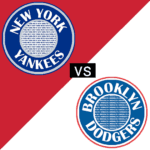
Game of the Day — Game 6 1956 World Series - A World Series Classic, New York Yankees vs Brooklyn Dodgers, Jackie Robinson in his final MLB at bat delivers World Series history.
April 15 highlights and Historic Days!
April 15, 1954 -- After a 51-year absence, big league ball returns to Baltimore as a crowd of 46,354 watch the Orioles beat the White Sox, 3 - 1, in the first game played at Memorial Stadium. Clint Courtney of the Orioles hits the first major league home run in the ballpark. A Baltimore ownership group, which includes Clarence Mills, Jim Keelty, Jerry Hoffberger and Zanvyl Krieger, bought the former St. Louis Browns and brought the franchise to the Charm City. Bob Turley started and got the win for the Orioles over Virgil Trucks. Vern Stephens and Eddie Waitkus were the hitting stars. Waitkus is 4 years removed from being shot in in a scene out of the Natural.
April 15, 1958, the San Francisco Giants host the first West Coast game in major league history. The Giants defeat the rival Los Angeles Dodgers in front of 23,448 fans at Seals Stadium sees Ruben Gómez blanking Los Angeles and Don Drysdale. Orlando Cepeda and Daryl Spencer hit home runs in the Giants’ 8-0 win
April 15 , 1968 -- At the Astrodome, the New York Mets and Houston Astros play the longest game in National League history. The six-hour and six-minute contest, in which each team has 79 at-bats and 11 hits, ends in the 24th inning when Bob Aspromonte's grounder goes through the legs of shortstop Al Weis as the Astros win, 1 - 0, allowing Norm Miller to cross the plate. Both catchers, Jerry Grote and Hal King caught the entire game. It sets the mark as the longest NL game played to completion, the longest major league night game, and the first 23 innings are the longest major league scoreless game. The game ties the American League's longest complete game (Philadelphia Athletics 4, Boston Americans 1, in 24 innings on September 1, 1906).
April 15, 1972, Reggie Jackson of the Oakland A’s becomes the first athletic to sport a mustache since Wally Schang of the Philadelphia A's in 1914 and Jackson is the first major league player with facial hair since Frenchy Bordagaray in 1936. Jackson starts a trend with the A’s, as owner Charlie Finley eventually encourages all of his players to grow mustaches. By the end of the season, the World Champion A’s will become known as the “Mustache Gang.”
April 15, 1977, Hank Aaron becomes the first player to have his uniform number retired by two teams. The Atlanta Braves retire his No. 44 during a pre-game ceremony. The Milwaukee Brewers had previously retired Aaron’s number.
April 15, 1997, commissioner Bud Selig announces that Major League Baseball will retire uniform #42 in honor of Jackie Robinson. The decision comes on the 50th anniversary of Robinson's historic debut with the Brooklyn Dodgers in 1947. Players who are currently wearing the number are allowed to continue to do so until they retire. Then April 15, 2007, on the 60th anniversary of Jackie Robinson's debut, the entire Dodger team wears uniform #42 in his honor.
April 15, 1993 -- Sparky Anderson earns his 2,000th victory as a manager as the Detroit Tigers rally to beat the Oakland Athletics, 3 - 2..
The Voices That Defined Baseball Are Waiting for You to listen to this game: Members click here or Start your free 7-day trial
Full Slate of April 15th Games on Classic Baseball Broadcasts: Listen here
Over a Dozen Games from April 15th . . . .
April 15, 1964 New York Mets (Tracy Stallard) vs Philadelphia Phillies (Jim Bunning)
April 15 1972 Los Angeles Dodgers (Don Sutton) vs Cincinnati Reds (Jack Billingham)
April 15, 1972 Pittsburgh Pirates (Dock Ellis) vs New York Mets (Tom Seaver)
Plus many more . . . .
TRIVIA
TRIVIA: Who was the first player to win the Rookie of the year and the MVP?
IF you think you know the answer and bonus points for how many respond with details and if you are right I will give you a shut out! No Googling!
Answer in tomorrows newsletter
New From Around the League!
Know someone who loves baseball like you do? Earn rewards by sharing the Rewind!
ANSWER TO YESTERDAY’S TRIVIA
YESTERDAY'S TRIVIA: In Billy Rohr’s master piece another rookie second baseman got him all the runs he needed with a homerun in just his 10th career game, who was he?
Answer: Reggie Smith off Whitey Ford
JOIN CLASSIC BASEBALL BROADCASTS TODAY
"Every story in today's newsletter has a broadcast behind it. They're all in the archive, exactly as they sounded on the radio the day they happened. Start your free 7-day trial and hear them tonight."
Get the FREE 7 day trial!
Press Play On Baseball History
Free subscribers read about baseball history. Paid subscribers hear it. Upgrade and unlock the Game of the Day broadcast plus select audio from our archive of 10,000+ hours of original radio broadcasts — legendary voices, real crowd noise, and moments that sound even better than they read. Less than a cup of coffee a month. Cancel anytime.
UpgradeDaily Full Game Broadcasts:
- Daily Full Game Broadcasts
- Periodical Interviews
